PROGRAM N°. 01 · BOXING, MUAY THAI & KICKBOXING
Striking Classes in Northern Virginia.
At Kaizen, striking is one art across three traditions. Boxing for hands and footwork. Muay Thai for kicks, elbows, and knees. Kickboxing as the bridge. Train all three.
- BEGINNER-FRIENDLY
- No experience needed
- MIXED LEVELS
- Every class, every body
Start Striking free
Quick answer
Striking at Kaizen MMA, taught across six Northern Virginia locations. Adult classes welcome first-timers and experienced athletes. Choose a gym to see its exact free-trial offer and class times.
WHAT'S INCLUDED
Boxing.
Muay Thai.
Kickboxing.
Two disciplines · One membership
Striking at Kaizen splits into two tracks. Train one, the other, or both, your free trial covers either. Location coverage differs slightly; the cards below show what runs where.
Muay Thai & Kickboxing
The art of eight limbs. Punches, elbows, knees, and kicks, with kickboxing as the bridge to a faster, lighter striking flow.
- Stance, footwork, and the eight strikes
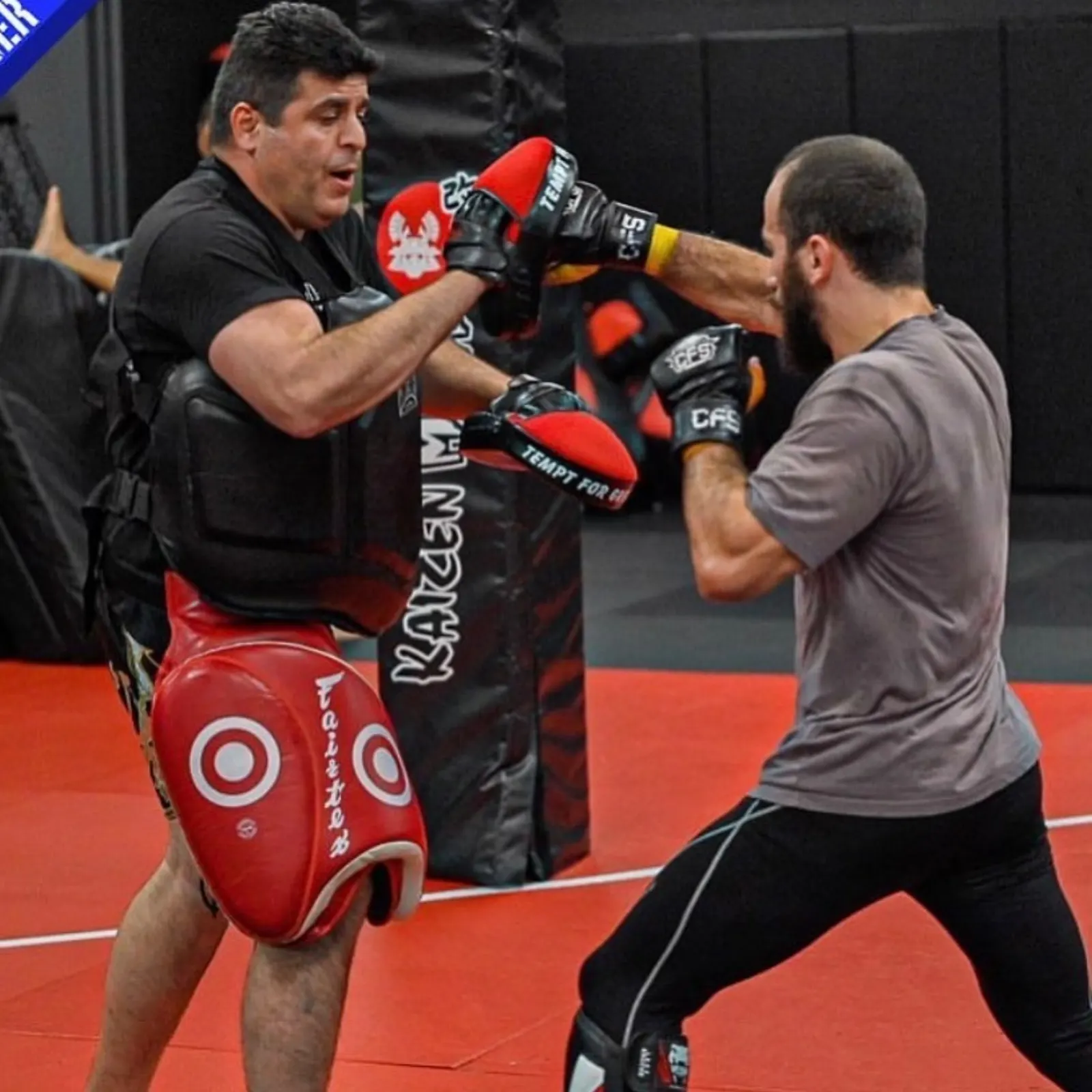
- Pad work with a partner, your pace
- Optional light sparring once you've built a foundation
Boxing
Pure western boxing. Hands, footwork, head movement, and ring craft, the cleanest stand-up foundation you can build.
- Mechanics, jab, cross, hook, uppercut, and how to chain them
- Movement, slips, rolls, angle creation
- Pad and bag rounds for power and conditioning
ABOUT THE PROGRAM
What Striking training includes
At Kaizen, striking is one art split across three traditions, Boxing for footwork and hands, Muay Thai for elbows, knees, and kicks, and Kickboxing as the bridge between them. We don't silo them. Train all three and you get a stand-up game that holds up against anything.
Boxing teaches you to read distance, slip, and counter. The hands sharpen first because they're closest to you and fastest. Muay Thai adds the rest of the body, shins for low kicks, elbows in the clinch, knees up the middle. Kickboxing puts it together at a tempo built for clean technique, not bar fights.
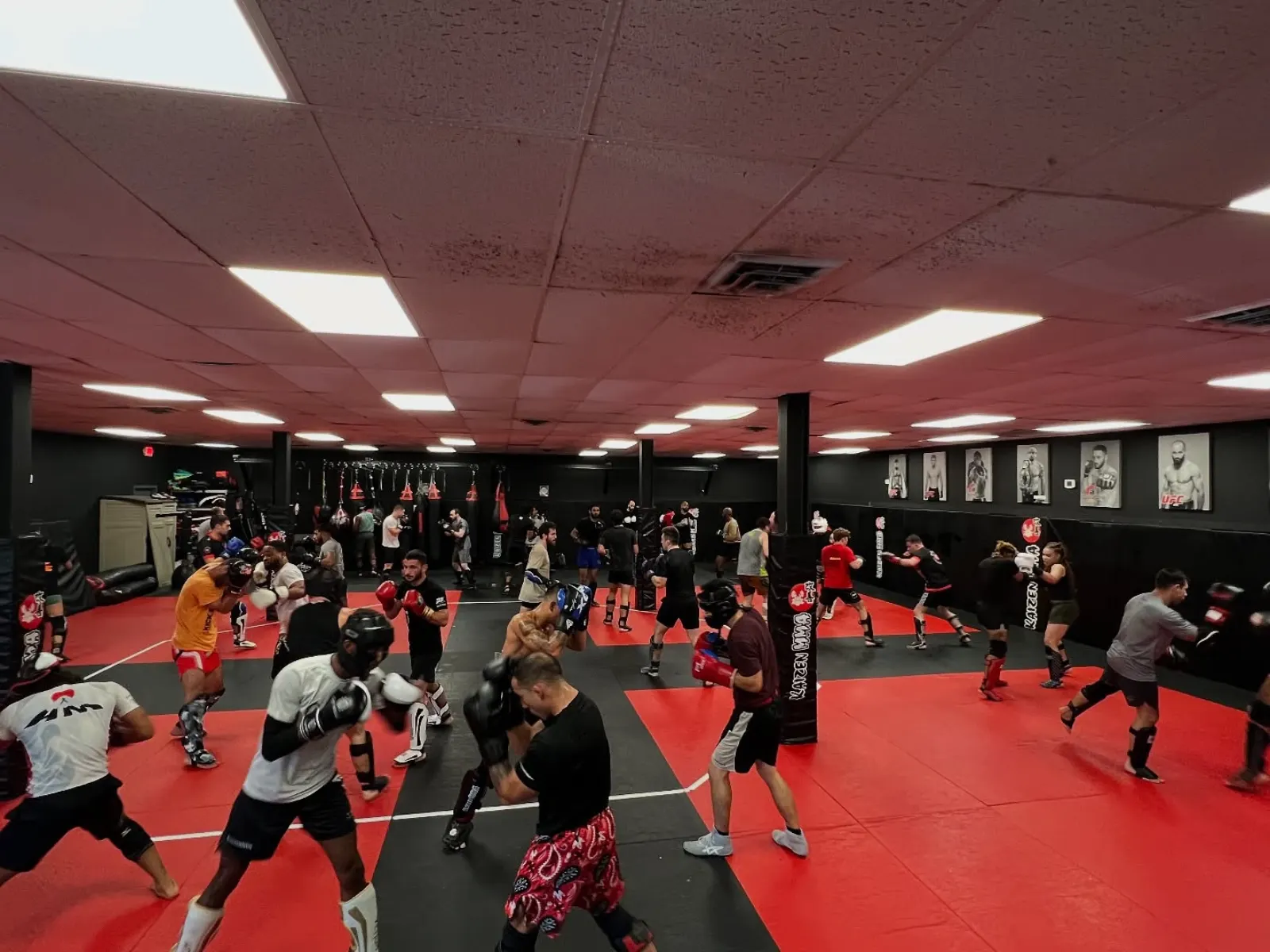
You don't need any background to start. Most of our striking members walked in never having thrown a real punch. Coaches scale every drill, you'll spend the first weeks on stance, footwork, and basic combinations before any partner work, and pad rounds before any sparring. Sparring is always optional and only available once you've earned it.
A CLASS · STEP BY STEP
What to expect in your first class
Dynamic warm-up with footwork, shadow boxing, and movement drills
Technique instruction, punches, kicks, elbows, knees, defense
Pad work with a partner at your own intensity
Bag rounds for power and conditioning
Light controlled sparring (optional, never required)
THE ARC · YOUR FIRST QUARTER
How Striking training progresses
- WK. 01 to 04
Footing & fundamentals
Stance, distance, movement. No sparring. Coaches scale every drill to where you are.
- WK. 05 to 12
Combinations & reading partners
Single techniques start linking into combinations. Pad rounds stop being choreographed. You'll start reading what your partner does next.
- WK. 13+
Controlled sparring
Light sparring opens up. It stays optional. Plenty of people train for months before they take a round.
WHY TRAIN HERE
What Striking training builds
Boxing, Muay Thai, and Kickboxing on one membership
Coordination, balance, and timing, not just cardio
Practical self-defense at distance and in the clinch
Full-body conditioning without needing a gym background
A community that meets you where you are and pulls you forward
QUESTIONS
Striking questions
Nope. Some members focus only on Boxing or only on Muay Thai. Many drift between them. The membership covers all striking classes so you can mix it however works for you.
Not even close. Most of our striking members weren't fit when they walked in, fitness builds as you learn. Coaches scale every drill to your current level.
Sparring is always optional and never required. Many members train for months or years without sparring and still get incredible results. Pad work and bag rounds give you everything striking can offer.
Athletic clothes, shorts or joggers, a t-shirt or rash guard. We train barefoot, so no shoes. Bring a water bottle and a towel. Hand wraps and gloves are nice to have but you can borrow them at the gym.
We teach real striking, proper mechanics, partner work, timing, and strategy. You're learning to actually strike, not just punch air to music. That said, the workout still wrecks you in the best way.