
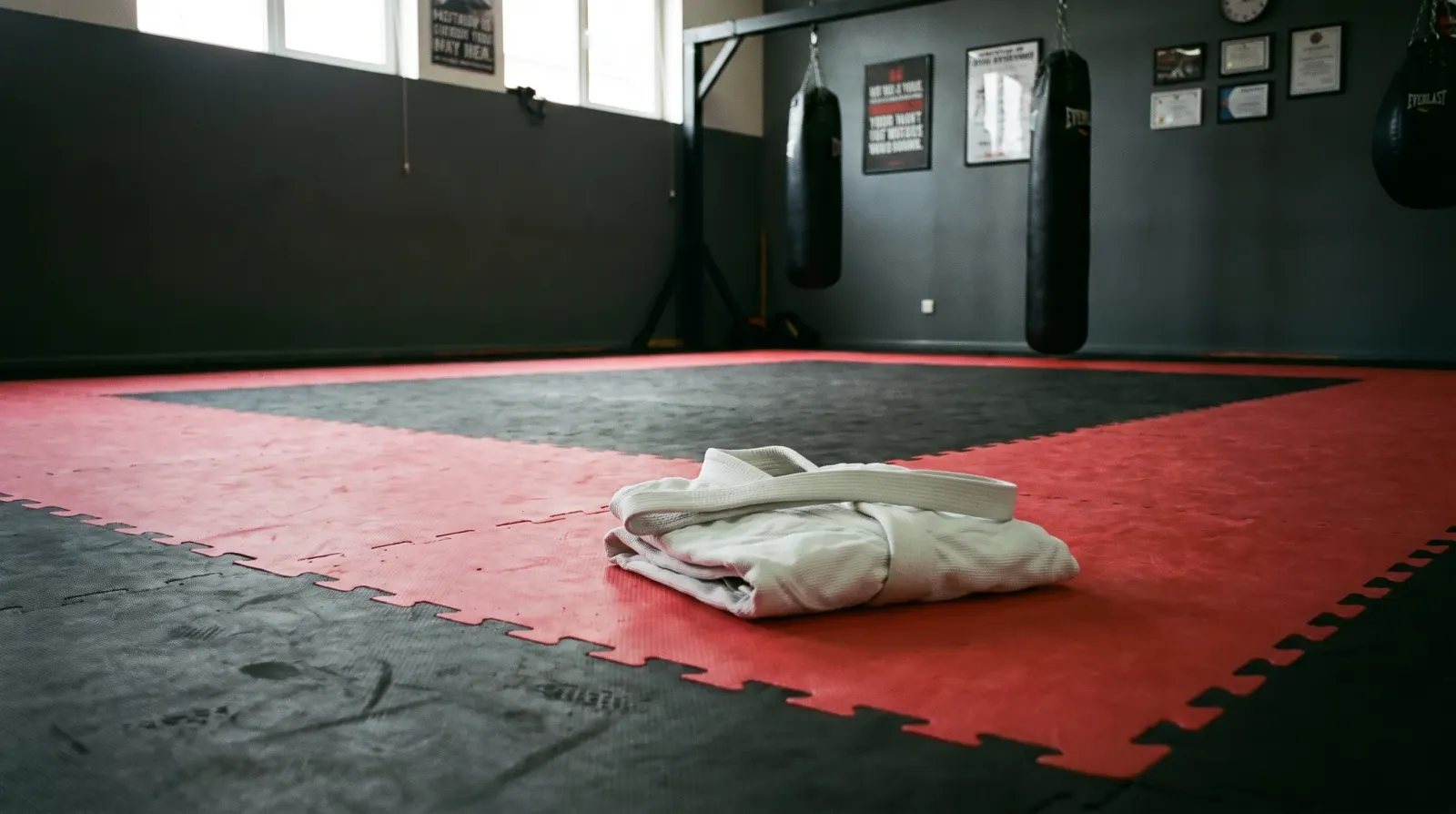
The single most common question I get before someone ever steps on the mat isn't about chokes or belts. It's "so what does this actually cost?" And I get why it's hard to find out. You click through five jiu-jitsu gyms in Northern Virginia and every one of them hides the number behind a "book a free trial" button. It's frustrating, and it makes people assume the worst.
So here's the honest version. I've coached BJJ for a long time, and I'll walk you through what adult jiu-jitsu really costs, what makes one gym $120 a month and another $220, and why almost every good academy, including ours, quotes you in person instead of slapping a price on the website. No sales spin. Just the real math you should have before you walk in anywhere.
Short answer: what BJJ costs per month
Most adult Brazilian jiu-jitsu memberships in the US run between about $100 and $200 a month, with busy metro academies landing closer to $150 to $250. On top of tuition, budget for a gi (usually $80 to $150, though a lot of gyms loan you one for the first class), and that's basically it to start. There's no belt-testing fee in BJJ the way there is in some traditional martial arts, which is one hidden cost you don't have to worry about. The monthly number is what matters, and it's driven far more by how often you train and what kind of gym you pick than by anything else.
The real BJJ cost breakdown, line by line
Here's the honest breakdown I give people when they ask. These are typical ranges across the sport, not a quote for any one gym. Your actual number depends on your city, your gym, and how many days a week you want to train.
| What you pay for | Typical range | Notes |
|---|---|---|
| Monthly tuition (limited, 2x/week) | $100 to $160 | The common starting membership |
| Monthly tuition (unlimited) | $150 to $250 | Better value if you train 3+ times a week |
| Gi (uniform) | $80 to $150 | One-time buy; many gyms loan one to start |
| No-gi gear (rashguard + shorts) | $50 to $90 | Only if your gym trains no-gi |
| Drop-in / single class | $20 to $40 | For travelers or trying one class |
| Private lesson (1-on-1) | $50 to $150 / hour | Optional, not needed to progress |
| Belt testing fee | $0 | BJJ promotions are earned on the mat, not paid for |
The line that catches people off guard is the last one. In a lot of martial arts you pay a testing fee every couple of months to move up. In jiu-jitsu, your coach promotes you when your skill earns it, and there's no invoice attached. If you want the full picture on how that progression works, I broke it down in our guide to BJJ belt levels and how long each takes.
Why don't jiu-jitsu gyms post their prices?
It's not a trick, even though it feels like one. The honest reason is that the right membership depends on what you actually want. Someone training twice a week for fitness needs a different plan than someone who wants to compete and train five days a week. Quoting a single number on a website either scares off the casual person or undersells the serious one. So most gyms would rather talk to you first, understand what you're after, and match you to the plan that fits.
The other reason is simpler: a free trial tells you far more than a price does. You can find the cheapest gym in your city and still waste your money if you quit in three weeks because you hated the room. The number on the website was never the thing that mattered. Whether you actually want to come back is. That's why we, and most good academies, put the trial before the price.
What makes BJJ cost more or less
Once you're comparing gyms, the price differences come down to a few real things, in rough order of impact.
How often you train. This is the biggest lever by far. A twice-a-week plan is cheaper than unlimited, but unlimited almost always costs less per class once you're showing up three or more times a week. If you're serious, unlimited is usually the better deal even though the sticker price is higher.
What kind of gym it is. A dedicated academy with multiple black-belt coaches, a real fundamentals curriculum, morning and evening classes, and clean mats costs more than a garage program run out of a back room. You're paying for coaching depth and structure, not just floor space. The cheaper option isn't always the worse deal, but you should know what you're actually buying.
Location. Rent drives price. A gym in a high-cost area like Tysons or Falls Church will usually run a little higher than one further out. It's a real factor, but a smaller one than most people expect, and it's not worth driving 40 minutes to save $30 a month on a hobby you want to stick with.
Contract vs month-to-month. Some gyms discount tuition if you sign a longer agreement. That can be fine if you already know you love it, but as a beginner I'd lean toward month-to-month until you're sure jiu-jitsu is your thing. Don't lock into a year on day one.
Gi, no-gi, and the gear you actually need
The gear question is where people overspend before they even start. You do not need $400 of equipment to train jiu-jitsu. For gi classes, you need one gi and a belt, and most gyms will lend you one for your first few sessions so you can try before you buy. A solid beginner gi runs $80 to $150 and lasts years. For no-gi, you need a rashguard and shorts, maybe $50 to $90 total. A mouthguard is smart and cheap. That's the whole list.
If your gym trains both styles, you'll eventually want gear for each, but there's no rush. Start with what the class you're taking requires. If you're not sure which style to begin with, I wrote a full comparison of gi vs no-gi BJJ to help you decide. Everything else you'll see advertised, the fancy grips, the extra gis, the compression gear, is optional and can wait until you actually know you're staying.
What does BJJ cost per class, really?
The monthly number can look scary until you break it down per session, and that's the math that actually tells you if it's a good deal. A $150 twice-a-week membership works out to roughly $17 or $18 a class if you show up both days. A $220 unlimited membership where you train four times a week is about $12 or $13 a class, and it keeps dropping the more you go.
That's the quiet argument for training more, not less. The people who get the most out of jiu-jitsu, both in skill and in dollars, are the ones who show up consistently. An unlimited plan you use twice a week is money left on the table. A limited plan you max out is a fine deal. Match the plan to how often you'll realistically train, then actually train that often.
Is jiu-jitsu worth the money?
I'm biased, so take this for what it's worth, but here's the honest case. For roughly the price of a mid-tier gym membership, you get a real skill instead of a treadmill. You get in shape without thinking about getting in shape, because you're too busy solving problems to be bored (more on BJJ as a workout). You learn to stay calm under pressure, which carries into the rest of your life more than people expect. And you get a room full of people who'll notice if you stop showing up.
Compare it honestly to what you're already spending. A globo-gym membership you barely use, a few restaurant meals, a streaming stack you forgot you subscribed to. Jiu-jitsu costs about the same as one of those and gives you a lot more back, as long as you actually go. The worst deal in BJJ isn't a pricey gym. It's a cheap membership you quit in a month. If you're weighing whether to start at all, our piece on starting martial arts as an adult with no experience walks through what the first few months actually feel like.
What BJJ costs in Northern Virginia, and at Kaizen
Northern Virginia sits at the higher end of the national ranges above, mostly because of rent. Expect adult jiu-jitsu around here to land in that $150 to $250 band for a serious academy, a bit less for a limited plan or a smaller program. That's the honest lay of the land across Fairfax, Falls Church, Vienna, and Ashburn.
For Kaizen specifically, I'm not going to print a number here that might be wrong for your situation, because our plans depend on which location you train at, how often you want to come, and whether you're doing BJJ alone or rolling it into MMA. What I'll tell you plainly is that we quote you the real number in person, with no pressure, after you've come in and trained. The best move is to book a free trial class, come see the room, roll a little, and let us give you an honest price for the plan that fits. You can see the full class schedule first, or read more about our adult BJJ program. If you want to know what walking in actually feels like before you commit, here's what to expect in your first class.
Curious how kids pricing compares? It runs on a slightly different model, and I broke it down separately in our guide to kids martial arts cost in Northern Virginia.
How much does BJJ cost per month on average?
Most adult jiu-jitsu memberships run about $100 to $200 a month, with busy metro academies landing closer to $150 to $250. A twice-a-week plan sits at the lower end and unlimited training at the higher end. In higher-rent areas like Northern Virginia, expect the upper part of that range.
Are there hidden fees in BJJ?
Fewer than in most martial arts. Unlike some styles, BJJ has no belt-testing fees, so your monthly tuition is usually the whole cost. The only real extras are a gi (a one-time $80 to $150, often loaned to start) and, if you compete, tournament entry fees, which are optional.
Why won't gyms tell me the price online?
Because the right plan depends on how often you want to train, and a single website number either scares off casual beginners or undersells serious ones. A free trial also tells you far more than a price does, since the real question is whether you'll want to come back. That's why most good academies put the trial first.
Is unlimited BJJ worth it over a twice-a-week plan?
If you train three or more times a week, yes. Unlimited almost always costs less per class once you're showing up that often, and the people who improve fastest are the consistent ones. If you know you'll only make it twice a week, a limited plan you actually use is the better value.
How much gear do I need to buy to start?
Very little. For gi classes you need one gi and a belt, and most gyms loan you one for your first sessions. For no-gi you need a rashguard and shorts, plus a cheap mouthguard. That's the whole list to start. Everything else can wait until you know you're staying.